

How to Plan Conference Travel: A Step-by-Step Guide
Plan conference travel in the right order: anchor dates, booking windows, approvals, documents, and one shared itinerary built from your confirmation emails.

On this page

The easiest way to plan conference travel is to work backward from the one session or meeting you cannot miss, book flights and lodging inside the windows that suit your trip, and keep every confirmation in a single itinerary instead of scattered across inboxes. Conference trips fail in small ways: a hotel block that closed, a connection that was too tight, a rideshare that cost three times the usual fare. Most of these come from information living in too many places. We built Tineo to turn booking confirmation emails into one organized trip, so the routine below ends with an itinerary you and your colleagues can actually use.
TL;DR
- Start from the conference’s exact dates and your anchor commitment (your talk, a keynote, a client meeting), then add a buffer day on each side.
- For domestic trips, plan to book flights roughly one to three months ahead; for international trips, two to eight months ahead. Lock in the hotel soon after.
- Get approval and a line-by-line cost estimate before you commit to anything if your employer or school reimburses you.
- Forward each confirmation email to one itinerary, then add sessions, meetings, and ground transport so the whole trip reads as a day-by-day timeline.
- Share the plan with colleagues, and decide in advance who watches for delays and changes.
Table of Contents
- Why conference trips are harder to organize than vacations
- Step 1: Anchor the trip to the conference schedule
- Step 2: Book inside the right windows
- Step 3: Get approval and estimate the real cost
- Step 4: Check documents for international conferences
- Step 5: Build the itinerary around your anchor
- Step 6: Coordinate with colleagues
- Step 7: Prepare for changes
- What Tineo does for a conference trip
- Pre-trip checklist
- FAQ
- Sources
Why conference trips are harder to organize than vacations
A vacation has a loose schedule. A conference trip has fixed points: registration hours, a session in a specific room, a dinner with a client, a flight home that has to line up with your return to work. Several people often travel to the same event on different flights and different hotels, and an employer may need to approve costs first.
That creates three kinds of problems:
- Timing problems. Hotels near the venue fill up, and prices climb as the event approaches.
- Paperwork problems. Approvals, receipts, and for international events, passports and visas.
- Information problems. A flight confirmation in one email, a hotel in another, a registration receipt in a third, and a shared spreadsheet that is already out of date.
The steps below deal with each, in the order you will meet them.
Step 1: Anchor the trip to the conference schedule
Before you open a booking site, check the conference’s exact start and end dates and times. A planning guide from the SAS Users Group advises staying for the entire conference, including any early or late duties, and choosing your presentations in advance, with a backup for each time slot in case a room is full.
Then identify your anchor: the moment the trip exists for. It might be your own presentation, a keynote, a booth shift, or a client meeting. The EA Campus guide to business travel recommends building the itinerary door to door and working backward from that moment, so you arrive prepared rather than rushed.
A simple way to do it:
- Write the anchor event with its date, time, and room.
- Add the latest sensible arrival: usually the day before.
- Add the earliest sensible departure: usually the day after the last session or meeting you need to attend.
- Note anything fixed on either side, such as a school pickup, a team meeting, or a weekend commitment.
The SpaceVision conferencing guide suggests arriving the day before and leaving the day after, with the example of booking flights for November 5 to 9 for a November 6 to 8 event, to absorb delays and see the city. The authors of a PLOS Computational Biology guide to first conferences give similar advice: arrive before your scheduled presentation and leave after it, and allow enough time for multi-leg connections.
Step 2: Book inside the right windows
Timing is the biggest lever on cost and convenience. The published windows differ a little by source, which is normal, since they depend on the destination and the size of the event. Use them as ranges.
| What to book | Typical window | Source |
|---|---|---|
| Domestic flights | 1 to 3 months ahead | Citi travel guide, 2026 |
| International flights | 2 to 8 months ahead | Citi travel guide, 2026 |
| Conference hotel | 2 to 3 months ahead, or 4 to 6 months for events over 5,000 attendees | Eventhost, 2026 |
| Hotel room block | Within the first week it opens | 47Hz, 2026 |
Two practical points from these guides are worth acting on:
- Check for a room block. Conferences typically contract guaranteed rates at nearby hotels, so the PLOS guide advises that attendees heed the deadlines and sign up early.
- Prefer refundable rates early. 47Hz notes that hotels near a major venue can sell out or surge to two to three times normal rates in the weeks before the event, and recommends booking refundable rates and rebooking if prices drop.
Citi’s guide suggests booking flights before accommodations and reserving lodging soon after flights when dates are busy. It also advises pre-booking airport transfers, because event-week rideshare pricing can surge.
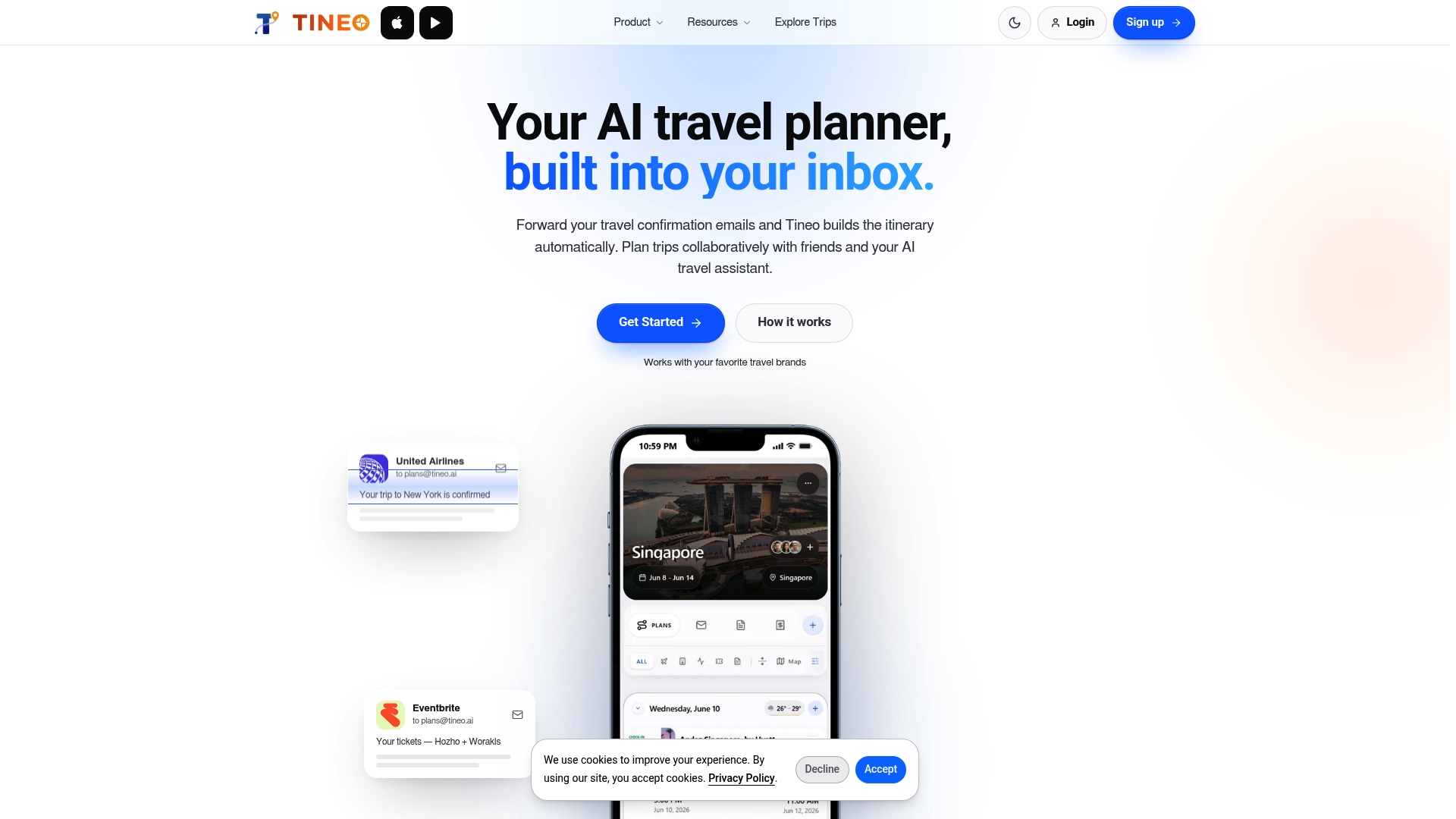
The moment you book each item, forward the confirmation email to Tineo. Our app is built to turn those emails into an organized trip, so your flight, hotel, and car rental land on one timeline without you retyping times and confirmation codes. Doing it at booking time means the itinerary grows as the trip does, and nothing waits for a last-minute scramble the night before you leave.

Step 3: Get approval and estimate the real cost
If your employer, university, or grant pays, approval comes before booking. Policies vary, but two published examples show the pattern. The University of Central Florida’s travel manual requires a Spend Authorization that names the conference, states the benefit, and breaks out every anticipated cost by line, fully approved before any commitment is made. The Australian National University’s travel handbook says cost estimates must include allowances, ground transport, and booking fees, and that meals or lodging included in an all-inclusive conference fee must be deducted from the meals budget.
A workable cost sheet has these lines:
- Registration fee, and what it includes (meals, receptions, workshops)
- Flights, with checked bag fees if you need them
- Hotel nights, plus taxes and resort or parking fees
- Airport transfers and daily local transit
- Meals not covered by the registration fee
- Visa, passport, or insurance costs for international events
The ANU handbook also sets a limit worth noting as a pattern: reimbursement requests must be lodged within 30 days of the trip’s end. Your organization’s deadline will differ, so find it before you leave and keep receipts as you go. Because your confirmations already sit in one itinerary, assembling an expense report afterward means looking in one place for dates, amounts, and booking details.
Step 4: Check documents for international conferences
For travel abroad, start with the destination’s official entry rules. Requirements change, so rely on the embassy or foreign ministry for the country you are visiting and on the U.S. State Department’s country pages for U.S. passport holders, not on a conference’s general advice.
A few examples from official pages show how much lead time to expect:
- The Czech Ministry of Foreign Affairs says Schengen visa applications for a conference can be submitted six months at the earliest and 15 days at the latest before the trip, with standard processing of 15 days and up to 45. Applicants need supporting documents for the purpose of stay, accommodation, and financial means, plus travel medical insurance.
- The Hungarian Embassy in Seoul lists a passport valid at least three months beyond departure from the Schengen area, with at least two blank pages, and, for business travel, a letter of support from the host and an employer letter.
These pages apply to specific visa categories and applicants, so read the page for your destination and nationality. The PLOS guide’s broader advice is to factor visa and passport lead times and costs into both your timeline and your budget. In practice, that means checking your passport expiration date on the day you register for the conference, not the week before you fly.
Once your documents are in order, store copies with the trip. Tineo offers document storage and offline access on the Ultra plan, so passport scans, invitation letters, and booking confirmations are available even when you land without a data connection.
Step 5: Build the itinerary around your anchor
With flights and a hotel booked, turn the pile of confirmations into a day-by-day plan. The EA Campus checklist is a good model: trip overview, flight details with confirmation codes, accommodation, ground transport, meeting schedule, meal bookings, local information, and emergency contacts. It also recommends booking dinners ahead, which matters in a city full of conference attendees.
Here is how a three-day conference trip might look on a timeline:
| Day | What goes in the itinerary |
|---|---|
| Day 0 (arrival) | Flight, airport transfer, hotel check-in, registration pickup if offered, a quiet evening |
| Day 1 | Walk or transit route to the venue, opening keynote, two chosen sessions with a backup for each, dinner reservation |
| Day 2 | Your anchor commitment (talk, booth, client meeting), buffer time before and after, evening event |
| Day 3 | Final sessions, checkout, transfer to airport, return flight |
Two habits keep this plan realistic. First, pick sessions early and note a backup for each time slot, as the SAS Users Group guide suggests. Second, leave space between meetings. IATA’s guide to its Slot Conference advises using floor plans to estimate walking time and leaving gaps between appointments so you are not late to the next one.
In Tineo, flights, lodging, car rentals, and activities from your confirmation emails appear on one trip timeline, and you can add the sessions, meetings, and dinners that never arrive by email. You can open it on the web, iOS, or Android, which is useful when you start planning on a laptop and then check the room number from your phone in a hallway.
Plan the commute, not just the venue
Ground transport is easy to overlook. Research the airport, the venue’s location, and local public transit before you leave, as the SpaceVision guide recommends. Note the hotel-to-venue route and the travel time at the hours you will actually travel. If you choose a hotel a few blocks farther out for a better rate, the commute belongs in the plan.
Step 6: Coordinate with colleagues
Conference travel is rarely solo. Colleagues book different flights, share a rideshare, and want to meet for dinner. The SAS Users Group guide suggests checking whether people you know arrive or depart around the same time so you can share transportation, and keeping a shared record of friends’ and colleagues’ travel schedules.
A shared itinerary does this job better than a spreadsheet that someone has to update by hand. With Tineo, you can share a trip with the people traveling with you, so arrival times, hotel details, and dinner plans are visible to everyone. Each person can forward their own confirmations, which means nobody has to be the team’s data-entry clerk.
A short checklist for the group:
- Everyone shares flight arrival and departure times.
- Decide who is sharing which airport ride.
- Put the group dinner and any team meetings on the shared timeline.
- Agree on who monitors flight changes and who calls the hotel if plans shift.
- Add dietary or accessibility needs somewhere everyone can find them.
If family comes along
Some people add a few days to a conference trip with family. Give the family portion its own days on the same itinerary, with conference hours clearly separate from time off. If you are traveling with a toddler, a potty training travel checklist can help you plan the stretches around your commitments before the trip begins.
Step 7: Prepare for changes
Delays and schedule changes are part of travel, so a contingency plan belongs in the itinerary. The Mississippi state travel manual tells travelers to check flight status with the airline at least 24 hours before departure, and 48 hours for international flights, and to contact the airline immediately if a flight is canceled or severely delayed. Our post on flight status alerts covers how to stay ahead of changes.
Before you leave:
- Keep your airline’s reservation number and confirmation codes on the itinerary.
- Note the hotel’s phone number and the address of the venue.
- Save the confirmation for any pre-booked airport transfer.
- If your employer reimburses you, keep the delay or cancellation notice. The UCF manual, for example, asks for a memo, the cancellation notice, and the updated itinerary with the expense report.
If you cannot get data on arrival, offline access means your hotel address and confirmation codes are still there. That is one of the premium features in Ultra.
What Tineo does for a conference trip
Tineo is a travel planning and itinerary app that turns booking confirmation emails into organized trips. For a conference, that means your flights, hotel, car rental, activities, and documents sit on one timeline, shared with colleagues and available on web, iOS, and Android. Tineo organizes trips you have already booked; it does not book travel for you.
The free plan costs $0 per month. Ultra costs $4.99 per month or $39.99 per year and adds advanced AI capabilities, offline access, document intelligence, and premium trip management tools, which suit people who travel to several conferences a year. You can see both plans on the Tineo pricing page.
Pre-trip checklist
Use this the week before you leave:
- Conference dates, your anchor commitment, and session backups are on the itinerary.
- Flights, hotel, and transfers are confirmed and forwarded to the trip.
- Approval is in hand, and you know your reimbursement deadline.
- Passport, visa, and insurance are in order for international events.
- Colleagues have seen the shared plan.
- You know who handles delays and hotel changes.
- Offline copies of key confirmations are saved.
FAQ
How far ahead should I book conference travel?
For flights, Citi’s guide suggests about one to three months ahead for domestic trips and two to eight months for international ones. Hotels near large events often need earlier booking, with Eventhost recommending four to six months for events over 5,000 attendees. Check the conference’s room block deadline first.
Should I arrive the day before the conference?
In most cases, yes. Arriving a day early gives you room for delays and a chance to find the venue before your anchor commitment. Several conference guides recommend a buffer day on each side of the event. Your own schedule and budget decide whether a full day fits.
What should a conference itinerary include?
Include flight details with confirmation codes, hotel information, ground transport, your session and meeting schedule, meal reservations, local information such as weather and emergency contacts, and any travel documents. A day-by-day timeline is easier to use than separate emails.
Can Tineo book my flights and hotel?
No. Tineo organizes trips you have already booked by turning your confirmation emails into a shared itinerary. You book with the airline, hotel, or booking site you prefer, then forward the confirmation.
Sources
- Are you Ready? Preparing and Planning to Make the Most of a Conference (SESUG 2020)
- Conferencing 101 Guide (SpaceVision, 2025)
- How to get the most out of attending the IATA Slot Conference
- Planning a Trip for an Event or Obligation (Citi)
- Ten simple rules for attending your first conference (PLOS Computational Biology)
- When should I book my hotel for a conference? (Eventhost)
- Conference Travel Hacks for Founders (47Hz)
- Complete Guide to Planning Business Travel for EAs (The EA Campus)
- ANU Travel Handbook (June 2025)
- Travel Manual (University of Central Florida)
- Conference visa information (Czech Ministry of Foreign Affairs)
- Schengen Visa (Embassy of Hungary)
- Travel Manual 2024 (Mississippi Department of Finance and Administration)