

Settling Group Trip Expenses Across Multiple Currencies
Why per-currency balances make settling up on a multi-currency trip confusing, and how Tineo lets you pay once in any currency and clear the debts you choose.

On this page
If you owe a friend money in two currencies, paying extra in one of them does not settle any of the other. That mismatch is the real problem with tracking group expenses across currencies, and it is why Tineo now lets you pay once, in any currency, and choose exactly which debts that payment clears.
The problem with per-currency balances
Say you and a travel companion split expenses in euros, US dollars, and Japanese yen over the course of a trip. Tineo (like any accurate expense tracker) keeps a separate running balance for each currency, because a euro and a yen are not the same unit of value and should never be silently added together. That is correct behavior, but it creates a real annoyance at the end of the trip: you might owe your friend EUR 60, JPY 6,285, and USD 25, and there is no single “amount you owe.” There are three.
Traditionally, settling that up meant three separate payments, three separate confirmations, and three chances to lose track of which one you already sent. Overpaying the euro debt by ten dollars’ worth never touched what you owed in yen. The currencies stayed isolated, on purpose, because summing them at read time would hide real amounts behind an exchange rate that changes daily.
What Tineo does now
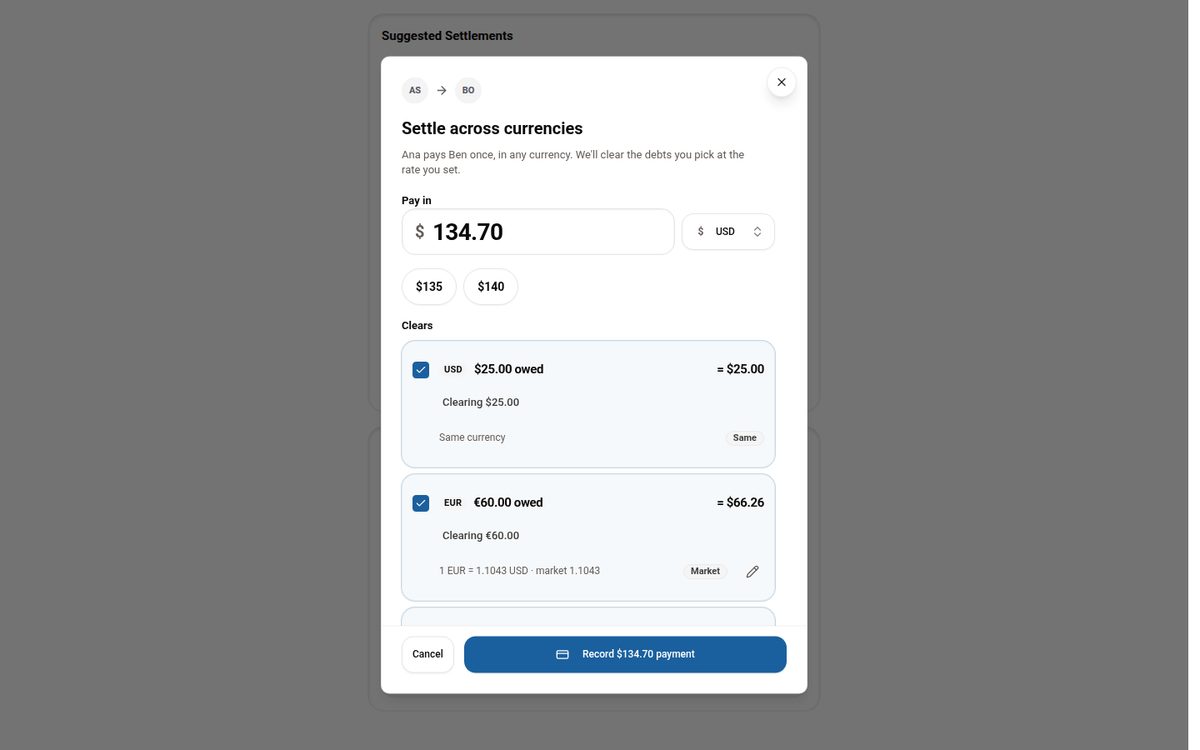
Tineo still never adds balances across currencies. What changes is how you settle them. You can now record a single payment, in any currency you choose, and tell Tineo which of the outstanding per-currency debts that payment should clear:
- Pay in any currency. Pick the currency that’s easiest for you, regardless of what currency the underlying debts are in.
- Choose which debts it clears. A checklist shows every currency the other person is owed in, each with the amount outstanding. Uncheck any you want to leave for later, or clear only part of one.
- Set your own rate, or round the total. Tineo shows a market reference rate for each debt as a starting point. You can use it, round the total payment to a clean number like $135, or enter the exact rate you agreed on with your travel companion.
- See exactly what got cleared. After the payment, the history shows the amount paid in each currency and the rate used, so there’s no guessing later about what a lump-sum payment actually covered.
Nothing about this changes how balances are calculated day to day. Expenses and debts are still tracked per currency. What’s new is a way to close out several of those balances in one transaction instead of one payment per currency.
A worked example
Ana and Ben shared expenses on a trip that touched three currencies. By the end, the numbers looked like this:
Scroll sideways to read every column.
| Currency | Ana owes Ben |
|---|---|
| EUR | 60.00 |
| JPY | 6,285 |
| USD | 25.00 |
Ana wants to settle everything at once, in US dollars, since that’s the currency her card statement will show. Using that day’s reference rates (1 EUR ≈ 1.1043 USD, 1 JPY ≈ 0.006912 USD), the three debts convert to a market total of $134.70:
Scroll sideways to read every column.
| Debt | Converted at market rate |
|---|---|
| USD 25.00 (same currency) | $25.00 |
| EUR 60.00 | $66.26 |
| JPY 6,285 | $43.44 |
| Total | $134.70 |
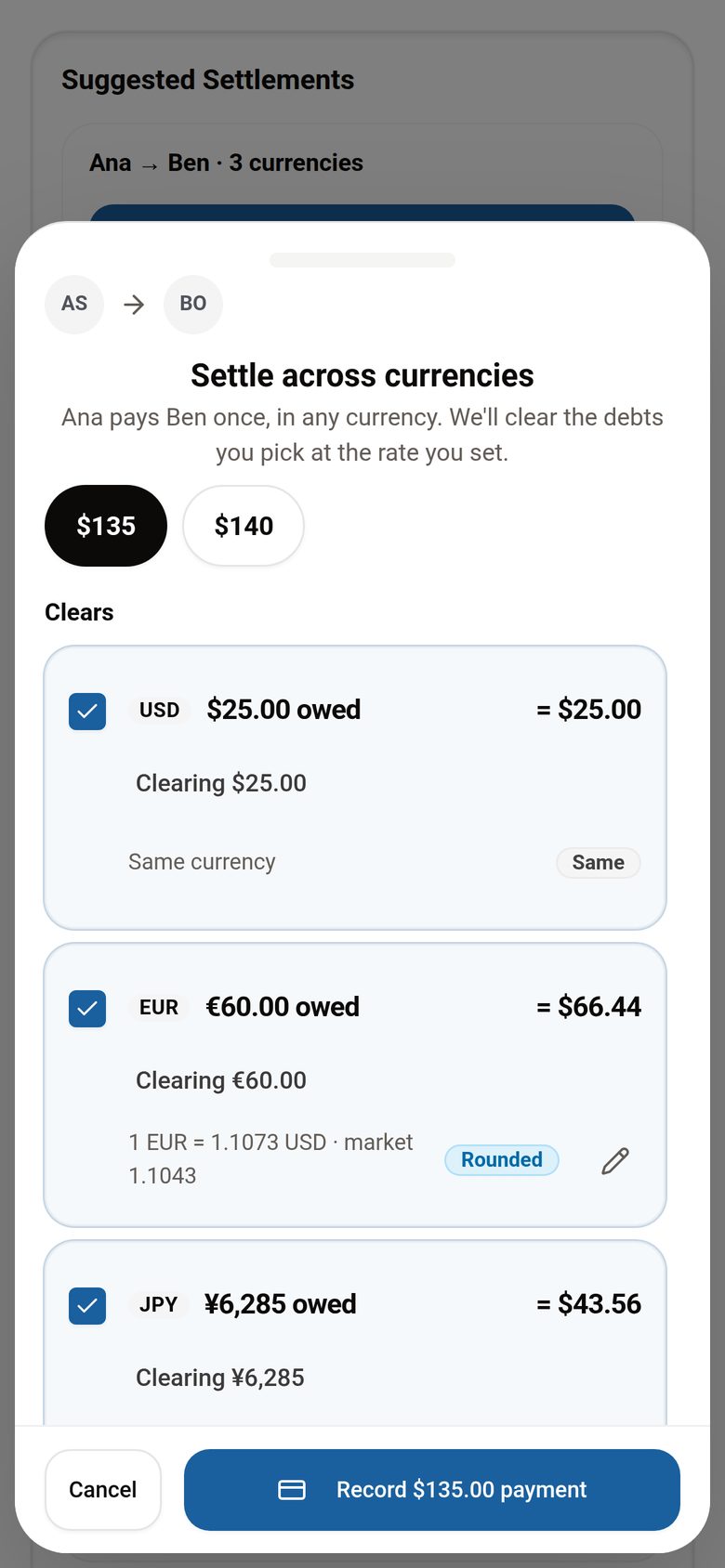
Rather than send an odd amount, Ana rounds up to $135. Tineo scales the non-identity debts to match that rounded total and shows her the effective rate it used for each one, both clearly above or below the day’s market rate:
- USD 25.00 → paid $25.00 (same currency, no conversion)
- EUR 60.00 → paid $66.44 (effective rate 1.1073)
- JPY 6,285 → paid $43.56 (effective rate 0.0069308)
$25.00 + $66.44 + $43.56 = $135.00 exactly. Ana records one $135 payment, and all three debts drop to zero. Ben’s payment history shows “Ana paid Ben $135.00,” with a secondary line spelling out exactly what got cleared in each currency and at what rate. If Ana had instead wanted to leave the yen for later, she could uncheck that row and settle only the euro and dollar debts, paying a smaller total and leaving the JPY 6,285 balance outstanding until the next payment.
What this does not change
A few things are unchanged by design:
- Balances still never get summed across currencies at read time. The only place a conversion happens is the moment you make the payment, and that result is stored as an exact amount, not recalculated later.
- Per-currency settling still works. If paying one currency at a time is simpler for your trip, the individual settle buttons are still there.
- You’re always shown what you’re agreeing to. Whichever rate you use, whether it’s the market rate, a round number, or one you typed in yourself, it’s recorded alongside the payment so it’s clear afterward what happened.
Frequently asked questions
Why does Tineo track a separate balance for each currency?
Because paying extra in one currency does not actually reduce what you owe in another. If you owe a friend euros and yen, overpaying the euro debt does not touch the yen debt. Tineo keeps a balance per currency so the numbers stay accurate, and never adds amounts in different currencies together.
Can I settle debts in more than one currency with a single payment?
Yes. You can record one payment in any currency, choose which per-currency debts it should clear, and set the exchange rate yourself or round the total to a clean number. Tineo removes the exact amount from each debt in its own currency.
Does Tineo pick the exchange rate for me?
Tineo shows a market reference rate to start from, but you can use it as-is, round the total to a whole number, or enter the exact rate you and the other person agreed on. Whatever rate you use is recorded with the payment.
What happens to the leftover if I round up?
Nothing happens automatically. If you choose to pay a rounded total that is larger than the debts it covers, you decide whether to keep the extra as credit toward a future debt. Otherwise the total is limited to exactly what the selected debts add up to.
Can I still pay each currency separately?
Yes. Settling across currencies is optional. The per-currency settle buttons you already use are unchanged, so you can keep paying euros, yen, or dollars one at a time if that is simpler for your trip.
Keep reading
Tineo
Tineo for Chrome: Import Your Booking From the Open Email
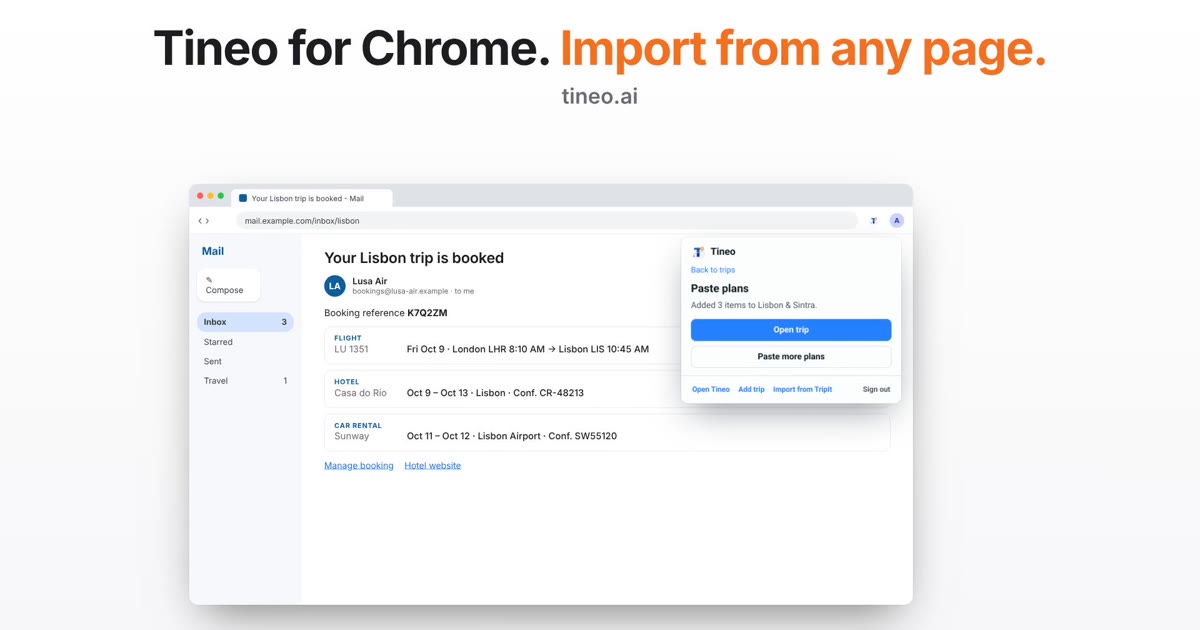
The Tineo Chrome extension can now read the booking email or page you have open and turn it into plans. Check the text, select Find plans, and choose what to add.
Tineo
Plan a relaxed travel day with Tineo Assistant
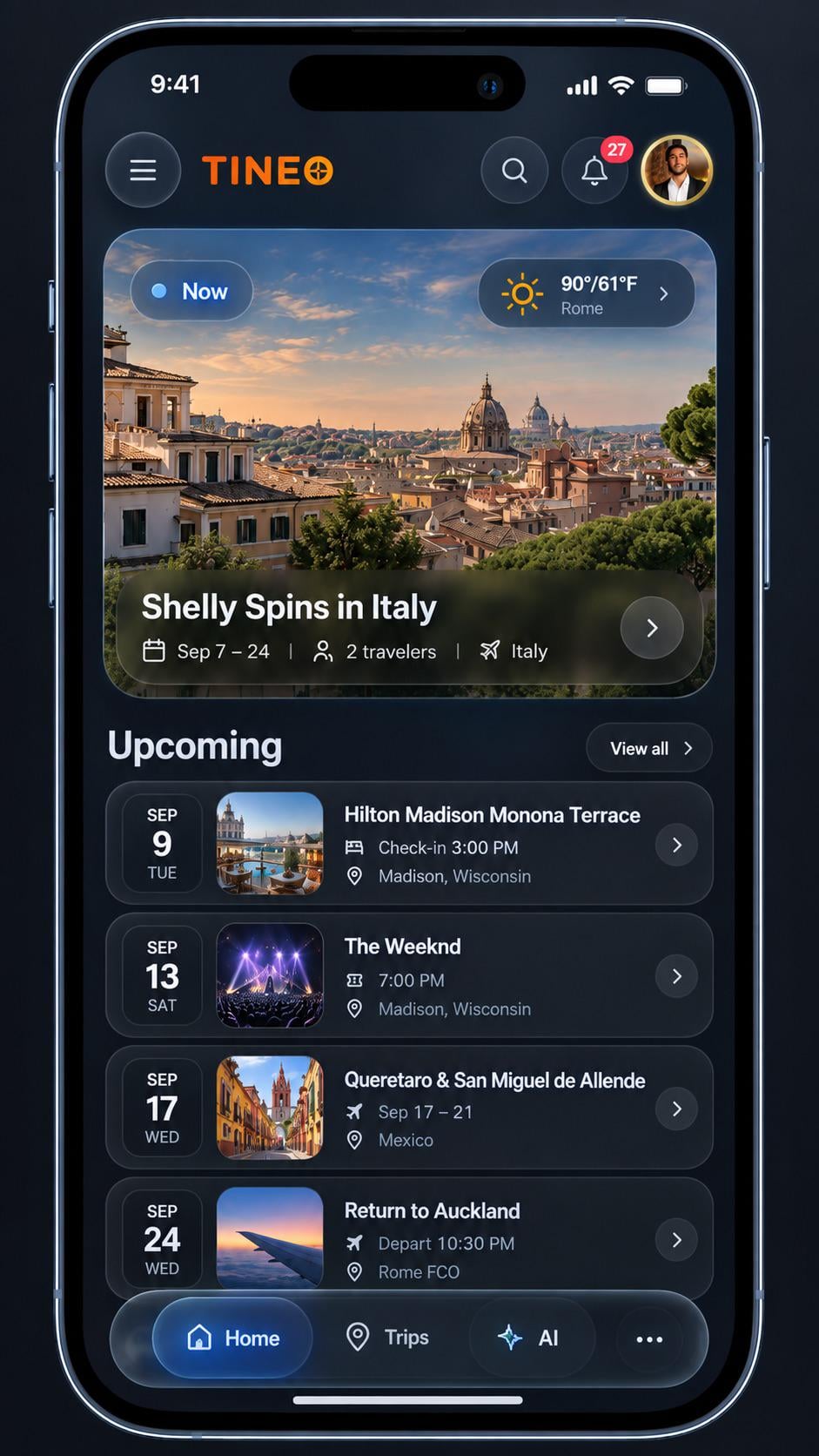
A practical walkthrough for turning a free afternoon into a realistic plan with Tineo Assistant, from preferences to a checked itinerary.
Let's Jetty
Let's Jetty Alternatives 2026: Best Group Trip Planner Apps
Looking for a Let's Jetty alternative? Compare the best group trip planner apps for RSVPs, polls, itineraries, email import, and offline access.