

Tineo Passed the Google CASA Tier 2 Security Assessment
Tineo passed the Google CASA Tier 2 assessment, validating controls for authentication, file handling, dependency hygiene, and production hardening.


On this page
Security work is usually felt before it is noticed.
When somebody connects Google, forwards confirmations, uploads files, or trusts an itinerary with real travel details, the product should feel calm. That calm only happens when the controls underneath it are doing their job.
Tineo has now passed the Google CASA Tier 2 security assessment. For us, that matters for a simple reason: it validates the work we did to tighten the product around real customer data and Google-connected flows.
Why CASA Tier 2 matters
If you use Google-connected features, you should expect more than convenience. You should expect discipline.
CASA is part of Google’s security review process for apps that request certain scopes and handle more sensitive user data. Tier 2 goes beyond surface-level declarations. It requires an external assessment of how the application handles risk in practice.
That does not mean “perfect forever,” and it does not mean the work is done. It means the security posture was examined in a serious way and met the bar required for this level of access.
Route map
How this review moved from prep to pass
The work was not one checklist at the end. It was a sequence of hardening steps and evidence gathering.
-
Review the data paths
We mapped where Google-connected data enters Tineo, how it is processed, and where controls needed to be stronger.
-
Tighten the controls
We hardened the application around authentication flow safety, input handling, dependency hygiene, and file-processing boundaries.
-
Gather evidence
The assessment required proof: configuration details, process documentation, and technical evidence that the controls were real.
-
Complete the assessment
An independent assessor reviewed the application and the supporting evidence against Google’s CASA Tier 2 expectations.
-
Pass and keep going
Passing the assessment marks a milestone, but the practical job is to keep shipping without letting the security posture drift.
The areas this validates
The assessment is broader than one feature. It reflects the controls around how the application behaves as a system.
Field guide
The areas that mattered most
Authentication flow safety
Google-connected sign-in and permission flows need the right boundaries, validation, and handling around sensitive scopes.
Input and sanitization controls
User input, imported data, and content paths need consistent validation so unsafe payloads do not get treated as trusted input.
File handling discipline
Uploads and imported artifacts need clear rules around type validation, processing boundaries, and safe downstream handling.
Dependency and patch hygiene
The application has to keep its package surface under control and respond to security updates in a disciplined way.
Production hardening
Headers, configuration, and environment controls need to reduce unnecessary exposure in the deployed system.
Operational evidence
Policies and procedures have to exist in a way that lines up with the product and the actual engineering work.
What changes for users
Most people will not notice a dramatic visual change because this kind of work is supposed to disappear into the product.
The better outcome is quieter:
- more confidence connecting Google accounts
- better trust in how imported travel data is handled
- a stronger foundation for future Google-connected workflows
- less mismatch between product ambition and security maturity
That is the point. The product should feel easier to trust, not louder about security.
Practical result
What this unlocks for Tineo
Trust for Google-connected flows
Customers can use Google-related features knowing the app has passed the level of review required for that access.
A stronger baseline
Future features start from a more mature security foundation instead of patching controls late.
Better internal discipline
The controls and documentation needed for the assessment improve how the team ships day to day.
The part that matters after the announcement
Passing an assessment is good news. Treating it like a one-time badge would be the wrong lesson.
The standard from here is straightforward: keep the same level of care as the product grows. That means tighter review loops, ongoing dependency attention, sane defaults, and less tolerance for “we’ll clean that up later” thinking around sensitive flows.
We’re proud of the milestone because it reflects real work. More importantly, it reflects the kind of product we want Tineo to be.
Keep reading
Tineo
Smart Check-In: When Check-In Opens and Closes for Your Airline
Tineo Smart Check-In shows when check-in opens and closes for your airline and route, adds airline notes, and opens the airline's own check-in page in one tap.
Tineo
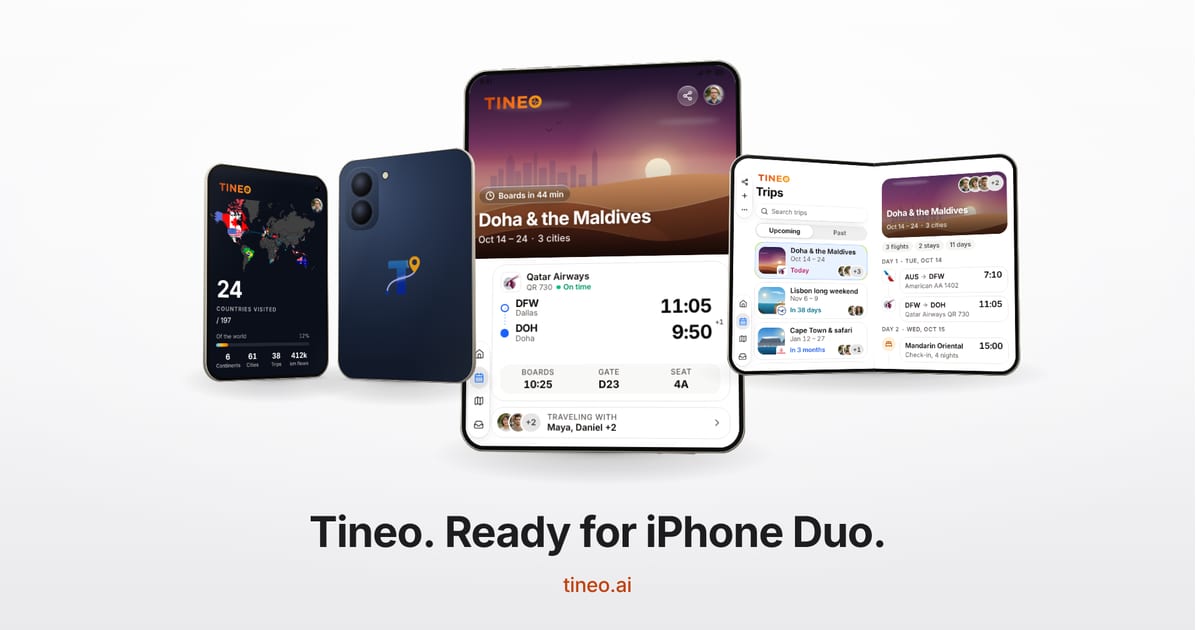
Tineo Is Ready for iPhone Duo: A Layout for Every Posture
Tineo on iPhone Duo adapts to every posture: closed, book, laptop and fully open. See how your trips, plans and map use the side strip and both pages.
Tineo
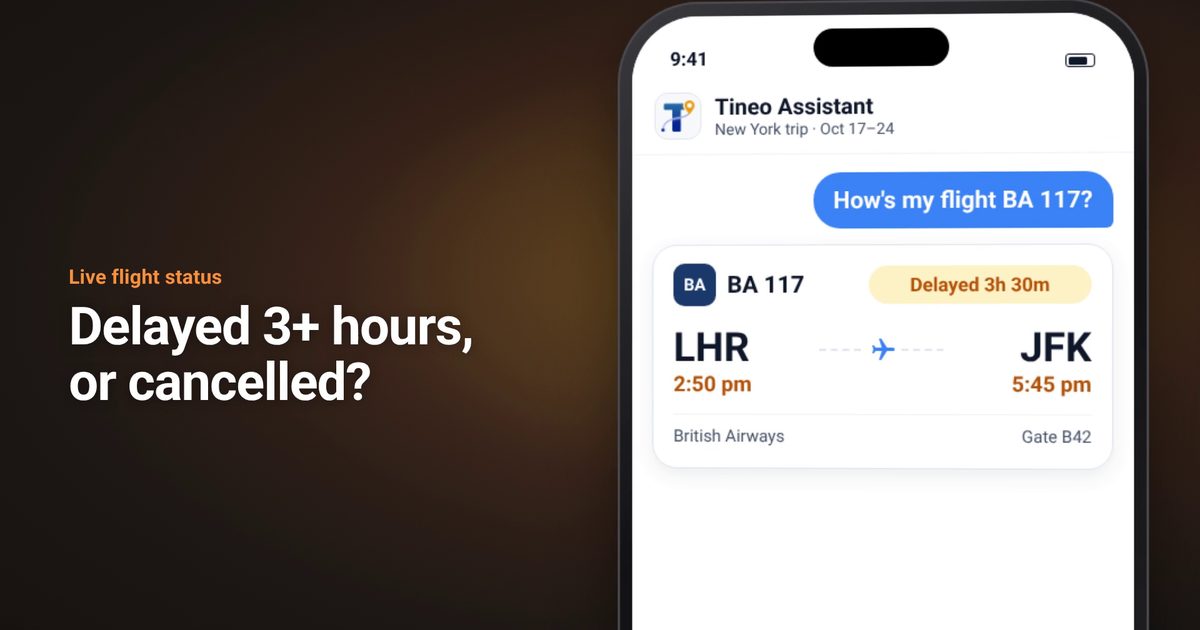
Flight Cancelled or 3+ Hours Late? Check Your Claim With AirHelp
When your flight is cancelled or arriving 3+ hours late, Tineo now links you to an AirHelp compensation check in the assistant and flight alerts.