

Usevacay Alternatives: 6 Trip Planners Compared for 2026
Looking for Usevacay alternatives? Compare Tineo, Wanderlog, Mindtrip, Layla, Stippl and TripIt by import, AI, group planning and offline access.

On this page

The best Usevacay alternative depends on what you need the app to do. If you have already booked and want flights, hotels, rentals and activities in one shared itinerary, we built Tineo for that job. If you are still hunting for ideas, a map-based or inspiration-first planner such as Mindtrip, Layla, Wanderlog or Stippl may fit better. Below we compare six options on the points that decide most switches: how reservations get in, how AI helps, how groups collaborate, and which devices work offline.
We make Tineo, so we say so up front. We describe the other apps only from public information we could point to, and we leave out prices and features we could not confirm. Check each provider’s own page before you pay.
TL;DR
- Already booked? Tineo turns confirmation emails into a single trip timeline, with web, iOS and Android access and shared itineraries. The core tier is free.
- Still choosing places? Mindtrip, Layla and Stippl lean toward discovery and building a plan from scratch.
- Offline matters? Wanderlog and Stippl list offline access on mobile. Mindtrip is web and iPhone only, with no official Android app.
- Planning with a group? Pick the app where every traveler can view the same plan without a long setup, ideally on their own phone.
- Before you commit: check platform support, offline behavior, and what the free plan actually includes.
Table of Contents
- What to look for in a trip planner
- Usevacay alternatives at a glance
- Tineo: organize the trip you have booked
- Wanderlog: day plans built around places
- Mindtrip: planning on a map
- Layla: AI-led trip ideas
- Stippl: shared plans with offline mobile use
- TripIt and the retired TripCase
- Which one fits your trip
- How to switch without losing your trip
- Questions to ask before you choose
- Try Tineo with your next booking
- FAQ
- Sources
What to look for in a trip planner
People search for alternatives because one tool handles one part of a trip well and another part poorly. Trip planning apps tend to split into two jobs:
- Deciding where to go and what to do. Discovery, saved places, route-aware day plans, AI suggestions.
- Managing what you already booked. Confirmation numbers, check-in times, flight details, rental pickups, documents, and who is traveling with whom.
Most frustration comes from using a discovery tool to manage bookings, or the reverse. Before you compare names, decide which job is bigger for your next trip. Then score each app on five criteria:
- Booking import. Can you forward or connect confirmation emails, or do you type every detail by hand?
- AI assistance. Does the assistant know your actual trip, or does it answer generic questions?
- Collaboration. Can friends or family view and edit the same itinerary without friction?
- Platforms. Does it run on web, iOS and Android, so every traveler is covered?
- Offline access. Will your plan open in an airport with no signal, or abroad without data?
Usevacay alternatives at a glance
The table summarizes what we could confirm. Platform and offline details for Wanderlog, Mindtrip, Layla and Stippl come from a 2026 comparison of AI trip planners. Tineo details come from our own product pages.
| App | Best for | Platforms | Offline access |
|---|---|---|---|
| Tineo | Organizing trips you have booked, from confirmation emails | Web, iOS, Android | Offline access is part of the paid Ultra plan |
| Wanderlog | Building a day-by-day plan with places and maps | Web, Mac, iPhone, iPad, Android | Listed |
| Mindtrip | Visual planning on a map, saved inspiration | Web, iPhone (no official Android app) | Web-first, needs a connection |
| Layla | AI-led trip ideas and chat planning | Web, iPhone, iPad, Android | Not listed in our source |
| Stippl | Collaborative planning with mobile offline use | Web, Mac, iPhone, Android | Listed on mobile |
| TripIt | Forwarding confirmations into an itinerary | Web and mobile | See provider page |
Prices change often, so we do not list competitor price points here. Open each provider’s pricing page for the current figure.
Tineo: organize the trip you have booked
Tineo starts from your confirmation emails. You bring in flights, lodging, car rentals, activities and other reservations, and we organize them into one itinerary instead of making you retype each one. The result is a timeline you can open on web, iOS or Android and share with the people traveling with you.
What that looks like in practice:
- Import. Confirmation emails become itinerary items, so the flight number, hotel address and rental pickup sit in one place.
- Collaboration. Friends and family can review a shared itinerary, and non-paying travelers can view trips others share.
- AI assistant. Our assistant works in the context of your trip, so questions are about your plans rather than a blank chat.
- Documents and offline access. Document storage and offline access are part of our premium plan.
Tineo does not book travel for you, and it does not promise any particular outcome. It organizes what you have already reserved elsewhere. If you want to see how we compare with other tools in more detail, our AI travel planner comparison covers the wider field by planning task.
Pricing. Tineo Free is $0 per month. Tineo Ultra is $4.99 per month or $39.99 per year, as listed on our pricing page.
Wanderlog: day plans built around places
Wanderlog is a planner built around places, maps and a day-by-day structure. According to the 2026 comparison linked above, it lists web, Mac, iPhone, iPad and Android, and it supports offline access. That platform spread makes it a reasonable pick for a group where people use different devices.
It suits travelers who like assembling a plan from many saved spots and want to see it laid out by day. If your biggest pain is the pile of confirmation emails rather than the list of places, check how it handles your reservations before you commit, since that is where tools differ most.
Mindtrip: planning on a map
Mindtrip puts the plan on a map. The same comparison notes that this helps you see whether a day is realistic or whether you have stacked six things at opposite ends of town. It can also turn saved inspiration from articles, reels, screenshots and Maps links into places, collections or full plans you can share with travel companions.
The platform note matters. Mindtrip lists web and iPhone, has no official Android app, and web-first tools need a connection. If anyone in your group uses Android, or you expect poor signal, that is a real constraint. We cover its group features in our write-up of Mindtrip’s visual planning with a group.
Layla: AI-led trip ideas
Layla is an AI-first planner. It lists web, iPhone, iPad and Android, so it covers both major phone platforms. It fits an early stage of planning, when you want a draft itinerary and suggestions to react to.
As with any chat-led planner, treat the output as a draft. Confirm opening hours, transit and entry rules with official sources before you build bookings around it. Once the trip is booked, you will still need somewhere to keep the confirmations.
Stippl: shared plans with offline mobile use
Stippl lists web, Mac, iPhone and Android, and supports offline access on mobile. That combination suits groups who plan together and then travel with patchy data. If your group needs a shared plan that works without a connection, it belongs on the shortlist next to Wanderlog.
TripIt and the retired TripCase
TripIt is the long-standing name for building an itinerary from forwarded confirmation emails, so it is the closest match to Tineo’s import approach. We wrote a head-to-head, TripIt versus Trippsy, if you want to see how that style of tool compares with newer planners.
If you used TripCase, note that the service is retired. Treat that as a migration: export or copy the trips you still need, then forward upcoming confirmations into your new app so future trips are rebuilt automatically. Do this before your next departure rather than at the airport.

Which one fits your trip
Use the situation, not the feature list, to choose.
Group trips with friends
The deciding factor is whether everyone can see the plan on their own device. Choose an app that covers iOS and Android, and where a traveler can open a shared itinerary without building an account’s worth of settings. Tineo, Wanderlog, Layla and Stippl list both platforms. Mindtrip does not offer an official Android app.

Families
Families usually need one source of truth: flights for four, a hotel confirmation, a rental pickup time. An import-based tool saves the parent who normally copies everything into a note. Share the itinerary with the other adult so either person can answer “what time is check-in?”
Business travel
For work trips, the priority is speed and accuracy: forward the confirmation, and see the whole day in order. Look for document storage and offline access, since airport and hotel Wi-Fi cannot be trusted. Keep company policy and expense rules separate from the itinerary app.
Inspiration-stage planning
If you do not yet know where you are going, start with a discovery tool such as Mindtrip or Layla. Our shortlist by planning task explains which tool fits which stage. Many travelers use a discovery app first, then move the booked trip into an organizer.
How to switch without losing your trip
- List what is booked. Flights, lodging, rentals, tours, and any rail or ferry tickets.
- Find the confirmation emails. Search your inbox for each provider name or the word “confirmation.”
- Bring them into the new app. In Tineo, forwarded confirmations become itinerary items. Check each one for the right dates and times.
- Add what email cannot capture. Dinner plans, notes and documents such as passport copies or insurance details.
- Share the itinerary. Send it to travel companions and confirm they can open it on their own phone.
- Test the offline view. Open the trip in airplane mode before you leave, on every platform your group uses.
- Check official sources for requirements. Entry rules, visas and health requirements change, so confirm them with the destination government or your airline, not with any planner app.
Questions to ask before you choose
Before you commit to any alternative, run through this list:
- Does it run on every phone in my group?
- Will my plan open with no signal?
- What is included in the free plan, and what sits behind a paid tier?
- How do reservations get in: forwarding, connecting an inbox, or manual entry?
- Can people who do not pay still view the itinerary?
- Is the AI aware of my actual bookings?
The answers to these decide whether a tool saves you time or adds another place to update.
Try Tineo with your next booking
If your trip is already booked and the confirmations are scattered across your inbox, Tineo can bring them together. Start on the free tier, and move to Ultra if you want offline access, document storage and advanced AI. Ultra costs $4.99 per month or $39.99 per year.
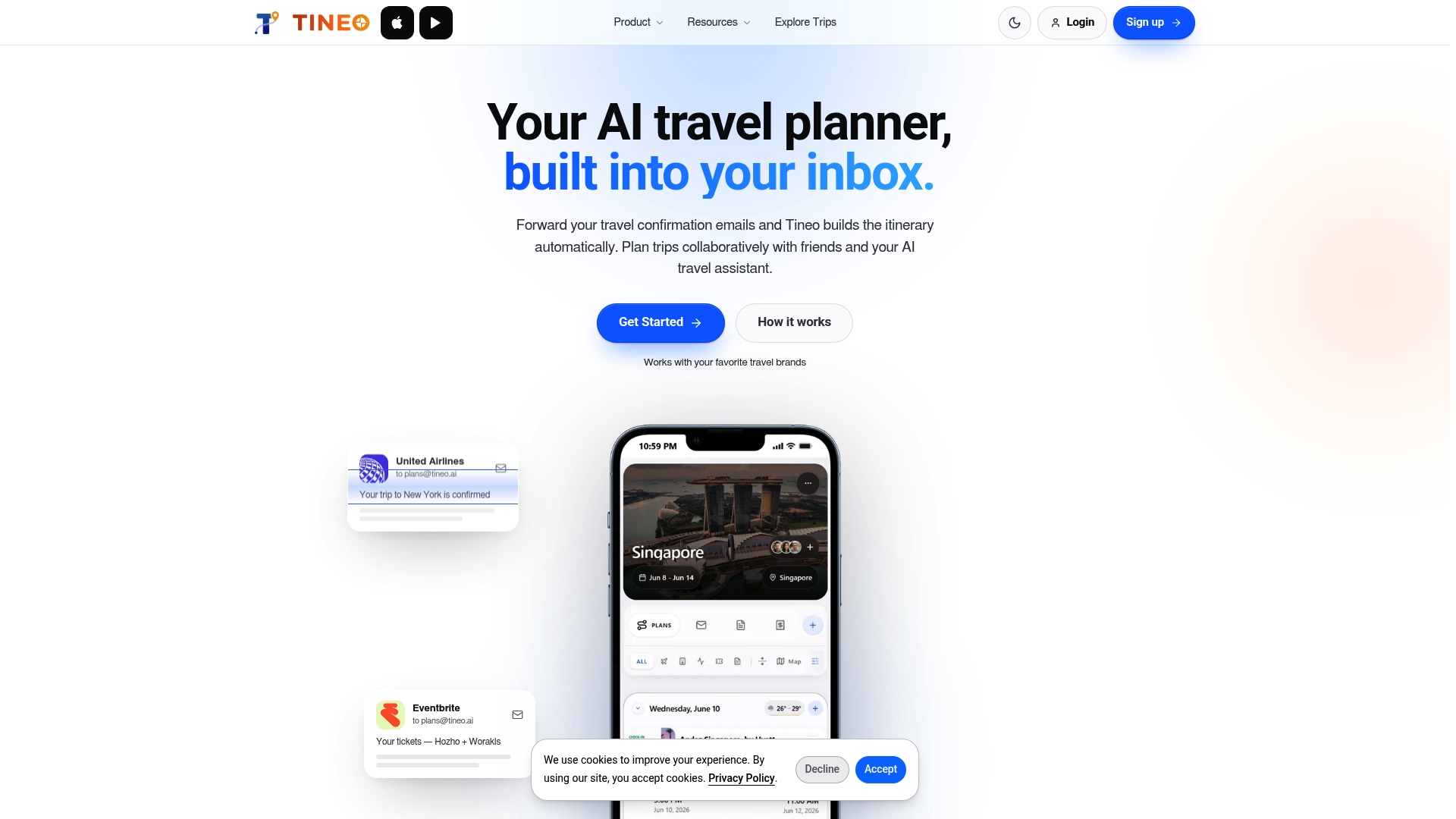
You can see the plans on our pricing page or start from the Tineo home page.
FAQ
What is the best Usevacay alternative for booked trips?
If you want confirmation emails organized into a single itinerary, Tineo is built for that. It brings flights, hotels, rentals and activities into one timeline you can share. Discovery-focused tools suit the earlier stage of choosing what to do.
Which alternatives work on both iPhone and Android?
According to a 2026 comparison, Wanderlog, Layla and Stippl list iPhone and Android support, and Tineo runs on iOS, Android and web. Mindtrip lists web and iPhone, with no official Android app. Confirm current support on each app store page.
Can I use these apps offline?
Wanderlog and Stippl list offline access on mobile, and Tineo includes offline access in its Ultra plan. Web-first tools such as Mindtrip need a connection. Open your trip in airplane mode before departure to be sure.
Is there a free option?
Tineo Free costs $0 per month and covers the core itinerary tools. Ultra adds premium features. For other apps, read the provider’s current pricing page, because free tiers change.
I used TripCase. What should I do now?
TripCase is retired, so move your trips to a current app. Copy any trips you still need, then forward upcoming confirmations to the new tool so itineraries rebuild automatically.